Thursday, November 17, 2011

Thanksgiving Favorites

This Thanksgiving I get to cook dinner for my family. Growing up, both my husband and I had traditional foods that were served during this special meal. This Thanksgiving I am planning to prepare the two most sought after dishes from both our families, carrying on the traditions.


Spinach Mushroom Dish


Ingredients:
3-4 Boxes of Frozen Spinach-thawed
2-3 pkg. of whole mushrooms-removed stems
1 c. shredded cheese or 8 oz. sliced processed cheese (Velveeta/American)
Mustard
Chopped Onion


Directions:
1. Drain Spinach thoroughly
2. Pat spinach around the edged of a casserole pan (like a pie-crust)
3. Place mushrooms in the middle of the spinach-using space well
4. Melt cheese and mix with a little onion and mustard
5. Pour cheese over mushrooms
6. Bake at 350 for 30 minutes


Cranberry Salad


Ingredients:
2 small packages Cherry Jell-O
2 cups cranberries, diced
1 cup apples, diced
1 cup celery, diced
1 cup walnuts, chopped
2 cups sugar
3½ cups hot water

Directions:
Prepare fruit and nuts
Add sugar and let stand 1 hour and stir
Make Jell-O with water
Let set up for about 1 hour in fridge
Add fruit and nuts and stir
Let set up in fridge

Monday, November 14, 2011

The Guestroom

I love having guests in my home. One of the funnest things for me is making up a comfortable guest room. Before we had a baby, we actually had a spare bedroom I reserved for guests. It was always enjoyable to have friends and family stay and let me spoil them. As the holidays approach, many homemakers are preparing for long-distance guests to arrive. I have compiled a general checklist of preparations a homemaker can make to prepare for her guestroom. 

The Guestroom


-comfortable bed-clean sheets-several pillows for guests to choose from

-extra blankets

-closet space for hanging dress clothes

-a box of tissues

-a trash basket

-a couple empty drawers in a dresser for extended staying guests

-luggage rack or table to lay out luggage

-freshly cleaned and folded towels and washcloths (average 2 per person-it will make them comfortable should an accident happen) I usually have 1 towel and washcloth per person and show my guests where my extra stash of linens are kept in case they need more.

-books/magazines/TV-forms of entertainment

-basket with light snacks (peanuts, pretzels, granola bars bottled water)

-coasters on nightstands beside the bed-many guests like to keep a glass of water beside their bed at night

-a spare plain bathrobe on a hook behind the door-slippers are a nice touch too

-a mirror in the bedroom is very important-especially for lady visitors

-a tray with safety and hairpins-these can be life-savers to a guest

-a easy-to-use alarm clock-not too bright

-1-2 outlets in the room that are easy to access for electronics. Guests will need a place to charge cell-phones and computers, outlets will also be needed for blow-dryers and curling irons.

-Either in the guestroom or bathroom and small basket with cotton swabs and cotton balls should be conveniently placed.

-I like to keep a Bible or two in the guestroom-sometimes guests come for a weekend visit and may want to take a Bible to church Sunday, or read it in their free time.


^V^V^V^V^V^V^V^V^V^V^V^V^V^V^V^V^V^V^V^V^V^V^V^V^V^V^V^V^V^V^V^V^V^

Nice Touch-Make sure the room is a comfortable temperature-and if it is possible locate the bed so it is not in the direct airway of a heat or air vent.

Nice Touch-A small fan in the room can help guests sleep better by blocking out unfamiliar sounds.

Nice Touch: Keep the dresser and tabletops in the guestroom empty-it is not an opportunity to display personal collections. Guests will need the space to spread out of their luggage.

Nice Touch: If there is room in the guestroom-a love-seat or chair is a welcome addition so guests are not confined to sitting on the bed.

Nice Touch: A good light by the bed to read by and convenient to shut off just before sleeping. (Guests shouldn't have to out of bed to switch of the light by the door.)

Nice Touch: If there are options, choose to place the guestroom in the most private and quiet corner of the home-near a bathroom is an added nicety.

Nice Touch: If guests are not allergic to pollen-a bouquet of fresh flowers can be purchased on the day of the guests arrival

Nice Touch: If the guestroom floors are wood or tile, a rug should be placed on either side of the bed or under the circumference of the bed so guest's feet do not touch cold, hard floors.

Above all-make sure the guestroom is neat and clean-freshly dusted  cleaned windows, and polished or vacuumed floors are wonderful. 

The key to making guests feel welcome is to encourage them to feel at home, loved, and wanted. 


Friday, November 11, 2011

Neglected Corners

I have found that in my general cleaning, very often there are places I neglect to clean. Sometimes, it is because they are simply unnoticed, other times because I assume that since they are out of sight, their overall cleanliness is less important than the places I see and touch on a daily basis.

Cobweb check:
Ceiling corners
Floor corners
Above lampshades
Around window frames and curtains

Doors:
Dust grates on metal folding doors
Dust around the doorframe (for wood stained frames, an occasional wash with Murphy’s oil or tea water will bring out the natural luster)
Outside of your front doors-they can look dingy with one good rain

Baseboard:
Can collect dust and grime needs a wipe down on occasion

Windows:
Both sides-in and out need to be cleaned if possible
Frames around windows-often collect dead bugs
Screens- can be removed and hosed down in a bathtub or outside

Sanitary Check:
A can of Lysol or vinegar water can be most helpful in the winter cold and flu season-unseen germs collect in these well used places all the time
Phones-including cell phones
Computers and Computer Mice
Doorknobs
Faucets and toilet handles
Light Switches
TV and Game Remotes
Toss toothbrushes every 3 months or when a sick person has used it
Microwave wet cleaning sponges for 2 minutes to kill bacteria/toss used sponges that are over 3 months old

High Places:
Light fixtures-can make a room twice as bright with clean globes
Ceiling fans
Above cupboards
Above refrigerator
Tops of curtains, drapes, and blinds (long handled feather dusters are great friends)

Insides:
Dishwashers should be wiped down and sprayed with sterilization fluid once a month/seals also need to be cleaned
Microwaves should always be kept clean-often the ceilings of microwaves are neglected in the cleaning process
Washing machine and Dryer

Underneath and Behind:
Kitchen and Laundry Room Appliances
Under Furniture
Behind TV and entertainment electronics

Walls:
Need to be wiped down-a Mr. Clean Magic Eraser is a great tool for getting the job done easily

Plants:
Both Fake and real plants need to be dusted

Trash Cans
Need a bit of rinsing out and a spray of disinfectant

Thursday, November 10, 2011

Basic Cleaning Techniques

I enjoy the art of cleaning. Oh yes, even cleaning has its finer points and takes creativity, thought, and structure. There is a method to cleaning. Don Aslett addresses the issue of cleaning order in his book Do I Dust or Vacuum First? For instance, there are rules that are important to follow that keep cleaning simple, effective, and time efficient. For instance, during my college days, I spent one summer cleaning houses. I learned a lot from making mistakes. I beat out a rug in the house-causing dust to go up in the air settle on the freshly dusted furniture. I also found that floors should be vacuumed and wiped clean after everything else has been cleaned. Some people take a lot of cleaning techniques for granted because a lot of it is common sense, however, as I said before, cleaning is an art, and for many people, the methods of cleanliness do not come naturally and must be learned. 


3 cleaning principles


1. Start from the top down in every project, whether it be wiping down a bathtub, dusting, or wiping walls. 


-starting from the top down allows gravity to work and carry dirt down where the floor will be the last project tackled. 


2. Wipe in swirls, whether it is counter-tops, windows, or floors.


-using a moment of small circles will eliminate streaks, missed spots, and lines in cleaning-giving a more thoroughly cleaned surface


3. Use the appropriate products for cleaning


-as tempting as multipurpose cleaners are, multipurpose has its limits. One does not want to use a water, ammonia, or alcohol based fluids on wood, and one certainly does want to use an oil based fluid on ceramics, counter-tops, or windows. 

Tuesday, November 8, 2011

The Empty Rocking Chair

Silence - see my comment


Being a wife and mother is a busy and demanding role. I place all sorts of personal expectations on myself-most of which I never meet. This past week my little baby girl got a cold. I suddenly began setting everything else aside to hold, and coddle her. It was then that I realized, motherhood had become a responsibility to me--not an enjoyment. Other people enjoyed my baby. They held her, played with her, cooed with her, and admired her pretty blue eyes. I did what a good mother should do, I changed her diaper, bathed her, fed her, put her to bed, read books to her, played peek-a-boo and patty-cake, and kept her with me and talked to her while I worked around the house. But had not stopped taking the time to just hold her. Oh, I held her a lot the first few weeks of her existence, but it wasn't long until I looked forward to her nap time so could get things done. I had reasoned myself out of rocking her. The doctor said it was good for her to be able to put herself to sleep without rocking. I didn't want her to get too attached to me rocking her that she wouldn't go to sleep for anyone else. It might be hard on her back...


Last week changed my perspective. I rocked her to sleep for the first time since she was two months old, then I held her and watched her sleep. It was then that I realized, I had been so busy being a mother to her, that I had neglected to simply stop, enjoy her, and soak up her essence. She is six months old now and just beginning to crawl. The time I have had with her on earth to this point has already fled from me. Before long, she will be too old to hold on my lap while I rock her to sleep. I have made a decision to treasure every moment I have with her and make the most of them-even if it means doing absolutely nothing for an hour but hold her while she takes her afternoon nap. Since then, I have made it a habit to rock her and hold her during her afternoon naps. She is too little for there to be an empty rocking chair in our home. The time will come soon enough for that.


Life is short and fleeting. We are wise to enjoy the people the Lord has placed in our lives while we can--whether it be grandparents, parents, children, spouses, or grandchildren. Every moment we have to share with them is first a treasure-duty comes second.


Monday, November 7, 2011

Thanksgiving Traditions

When Jim and I first got married I wanted to start some traditions of our own. We spent our first couple Thanksgivings with family, but when we moved west, we stayed home for Thanksgiving and enjoyed some traditions together. As our family grows I would like to create more traditions and am constantly looking for new ways to encourage a spirit of Thankfulness in our home--not just once a year either!

Thanksgiving Traditions

Purchase a large Tablecloth and permanent-non washable pens. Every Year, have your family and guests write and date what they are thankful for that year. We have done this for a couple years, and it is fun to go back and look at the events each year has brought that we are thankful for.

Thanksgiving History-a good 5th grade history book is a nice place to start and remember why the pilgrims came to America, what they suffered, and what the first Thanksgiving celebration was like.

Volunteer to serve dinner at a homeless shelter or purchase gifts for the rescue mission Christmas on black Friday.

Don't make Thanksgiving a seclusive family dinner-always invite friends and neighbors to join. Find people who have no family nearby and have them over. Or join another family for Thanksgiving. 

Like Christmas, Thanksgiving is another opportunity to reach out to the neighbors. Make Turkey cookies or pumpkin bread and deliver it with a friendly and gospel centered note to neighbors.


Friday, November 4, 2011

Defining Good Quality Clothing


As a professional seamstress with a clothing and textiles background, I have often been asked what some of the best quality clothes that I have seen. I would be the first to tell you that the little tag in the back of clothing that advertises a product name, has nothing to do with the quality of that item. I can tell you if an article of clothing is good quality by how it looks, feels, and the fabrics used and how it stitched together. The majority of the name brands people pay big bucks for are often fabricated in China, India, and Korea. In essence--those clothes are not made with high quality products.

Good Quality Clothing

Quality Appearance:
Look Comfortable
Well Fashioned/Tailored
Made to flatter and Fit
Classic or Classic with a touch of fashion-not overdone


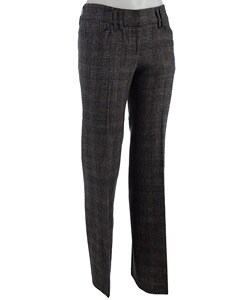
MICHAEL Michael Kors Women's Plaid PantsWool Plaid TrouserFor example the wool plaid trousers from LL Bean's Signature collection might not be my personal taste, but just looking at them, I can see they are high quality merchandise. The cut of the slacks is flattering and fashionable, unlike the plaid slacks from Overstock.com on the right. The appearance of the fabric also means a great deal. It should look special and unique and substantial. The slacks to the left are one of a kind, the fabric is probably custom selected for those slacks. The slacks on the right look uncomfortable, rough, and are probably cut from a standard stock of fabric that is used in hundreds of other retail designs.

Quality Feeling
Soft
Thick
Wrinkle Resistant

I love to touch fabric. I can tell a good piece of fabric from a cheaper piece simply by the feel of it. I was recently disappointed when I purchased some rather expensive and name brand T-shirts for my husband. I was unable to feel the shirts before I purchased them because they were packaged in plastic and I didn't feel right about opening them before purchasing. When I got home and unwrapped the package, I was disappointed to feel that the shirts were thin and rough. Not the thick, and supple feeling I thought an undergarment of that expense should have. Thin fabrics are usually an indicator of cheep, stingy producers. There are rare cases of thin fabrics that are of high quality. The key is the feel. Good quality thin fabrics should be luxuriously soft, if thin fabrics are rough, or only semi-soft, it is certain that the quality of the fabric is very cheap. I also like to squeeze clothes to test the wrinkle resiliency. The only fabric that is permitted to wrinkle is 100% linen. Other than that, most fabrics should bounce back pretty easily. 

Fabrics To Look For in Quality Clothing:
Lined Garments: Polyester is the only fabric that will never shred out of a coat or wear down in slacks-it is always the best choice for lining, however only high end clothiers use it, typically acetate lining is used. Acetate is the worst fabric invented-it wears out, it is noisy, uncomfortable, and overall cheap. Anything with acetate in it is therefore a cheap garment, I don't care how much it costs. 

Sweaters: Sweaters should be made of 100% wool or cotton to qualify as good quality clothing. Many sweaters are made from nylon, because the fact that is doesn't pill. However, it is an uncomfortable, artificial, and therefore lower grade fiber.

Jeans: The "Made in America" label will often determine the quality of fibers used in a pair of jeans. The Untied Stated has strict standards of fiber quality in manufacturing, whereas other countries have no standards and quality is weaker or non-existent. Jeans should be durable, well-cut, and soft. 

Socks and underwear: 100% cotton-the thicker, the softer, the better quality

Shirts, skirts, dresses: 100% silk, cotton, or linen-other than the linen, the fabrics should be wrinkle resistant

Suits: 100% wool-yes even for summer. Tropical wool is used to make lightweight suits and it is very comfortable even in the summer. Of course, suits should be lined with polyester.

Trousers: 100% cotton or 100% wool. 

The most important key to finding a good quality garment is the type of fabric used. Good quality clothes typically use 100% natural fibers such as cotton, wool, linen, silk, or other natural fibers. On occasion Rayon is used because of it's ability to flow and drape. Polyester is used in good quality clothing as lining fabric-that is it. 

Quality in the making:
Large seam and hem alloences
Lined garments
Secure stitching

How a garment is sewn together also tells a lot about the quality of the item. For example, I have altered oodles of bridesmaid gowns in the past few years. There are some brands, that I groan when I have to alter them because they are simply cheap. A well made gown will be made to altar because the producer expects that whomever buys that garment cares how perfectly it fits and will altar it accordingly. David's Bridal are the worst and cheapest gowns I have worked on, while Alfred Angelo is the nicest. David's Bridal will have very small seams and clip them-making letting out virtually impossible, while Alfred Angelo leaved a good inch of seam allowances. So before purchasing a more expensive garment-especially suits--I feel the seam allowances. A good piece of clothing will have generous amounts left in the seams. There will also be a good hem allowance on wool skirts and slacks to lengthen of needed. Another thing to look for in how a garment is made is to check for lining. Wool and some heavier fabrics should always be line-with polyester of course. Also, the only place I care to see chain stitching would be on hems. It should never-I repeat-never be used on the making of a garment. Just what I need is to catch a stitch and my whole garment falls apart!

Chain Stitch: Don't Want to See.


Regular stitches: Want to see.


Some Consistently Good Quality Clothing Brands
Tommy Hilfiger
L.L. Bean
Orvis
Eddie Bauer
Perry Ellis
Brooks Brothers


Wednesday, November 2, 2011

Mrs. Dunwoody's Tips-Purchasing Fruit and Vegetables

It can be difficult to chose fruits and vegetables at their optimum ripeness. I have the hardest time with melons and pineapple. I have found these tips from Mrs. Dunwoody's Excellent Instructions for Homemaking by Miriam Lukken most helpful.


Asparagus: Stalks should be tender yet firm; tips should be close and compact. Choose stalks with very little white, they are more tender. Use it immediately because it toughens rapidly.


Broccoli and cauliflower: Flower clusters should be tight and close together. 


Brussel Sprouts: Should be firm and compact. Smudgy, dirty spots may indicate insects.


Cabbage and head lettuce: Choose heads heavy for size. Avoid cabbage with worm holes, or lettuce with discoloration or soft rot. 


Cucumbers:n Chose slender cucumbers for the best quality. They may be dark or medium green, but yellow ones are undesirable..


Root Vegetables: Should be smooth and firm. Very large carrots may have woody cores; oversized radishes may be pithy; oversize turnips, beets, and parsnips may be woody. Fresh carrot tops usually mean fresh carrots, but the condition of the laves on most root vegetables does not indicate degree of freshness.


Cantaloupes: Thick, close netting on the rind indicates best quality. Cantaloupes are ripe when the stem scar is smooth and the space between the netting is yellow or yellow-green\. They are best to eat  when fully ripe with a pleasant, sweet, fruity odor.


Honeydews, Honeydews are ripen when the rind has a creamy to yellowish color and velvety texture. Immature honeydews are whitish green.


Watermelons. Ripe watermelons have some yellow color one side. If melons are white or pale green on one side, they are not ripe.


Pineapples. Pineapples are ripe when a leaf at the top of the pineapple pulls out easily. 

Thursday, October 27, 2011

Making Chicken Stock

Recently I have been getting really inexpensive chicken in bulk and freezing it. It so happens whenever I cook either a whole chicken or chicken parts, there are always bones, fat and gristle that can't be eaten, and therefore are often thrown away and wasted. I have been saving them and making really good stock with them.

Stock is made of the juices from the bones and cartilage of an animal, while broth is made just from the juices from the meat of an animal. To me, stock has a better flavor and is better for a person than broth becuase it contains minerals and gelatin that can only be obtained from the bones of an animal.

Making chicken stock is simple to do: 

1. Cook the bird or bird parts in any desired method and serve.

2. When the all the desired meat has been picked off the bones dump the remains from the bird in a large pot I don't bother to pick the bones clean-or remove fat or anything. Simply anything from the bird that I would ordinarily toss goes into the pot.

3. Cover the contents of the pot with warm water.

4. Simmer uncovered on low on the stove for a day (if I start simmering the bones after an evening meal, I will put the whole pot in the fridge overnight, and continue simmering the next day).

5. After the water has receded to about half of it's original height, removed pot from the stove and cool for an hour.

6. Pour the  contents of the pot through a sieve into a plastic storage container and refridge for up to two weeks or freeze up to a year. 


  • A layer of fat will surface on the stock which acts as a good preserver of the flavor and barrier against harmful bacteria while the stock is frozen or refrigerated. I usually pick off the fat before using the stock, which actually makes the stock fat free.


It makes my home smell like comfort-if comfort had a smell.

-I have about 2 gallons of stock frozen as a result of cooking my bird bones, and it is great to have on hand for soups, sick folks, casseroles, or gravy. My next step is to consolidate all the broth I have stored in the freezer and can it, so I can save room in my freezer for other things. 

Friday, October 21, 2011

Saving On Diapers

In my home, it is the season of diapers. I seriously considered using cloth diapers, but without a washing machine in my home, I figured the time and expense cleaning them was not worth it for me, so I am using disposable. The Lord knew I would need my time for other things anyway. The problem with disposable diapers is the constant expense. I have found couponing a very helpful method of saving money on purchasing diapers.


I was told Sam's club was the cheapest place to buy baby diapers, but they do not accept coupons, so after going there and figuring the cost per diaper compared to Target or CVS with my coupons, I found I could still purchase diapers much cheaper elsewhere.

The Two Cheapest stores to buy diapers:
Target
CVS


Target:


Target will accept two coupons per item-one manufactures coupon and one Target coupon. I registered for baby things at target, so often will get a baby coupon booklet in the mail from them. Sometimes, I get a coupon when I make a purchase. They also have coupons in the paper from time-to-time. So, I save up the coupons and use them along with a manufactures coupon. Saving up to $6 a box of name brand diapers such as Pampers or Huggies. The key is to watch for their adds. This week for instance, they are offering a $10 gift card for the purchase of 2 $29 128 count box of Huggies or Pampers. That is $58-$10-$8 worth of coupons bringing my total to $40 ($20 a box, .16 a diaper). That is not bad, but CVS is often even better.


CVS:


CVS gives you a free pkg of diapers for every 6 purchased. Because I purchased diapers from them, I received Pampers, Luvs, and Huggies coupons from their coupon kiosk regularly. I can combine a CVS coupon with a manufacturers coupon. For instance, this week, the jumbo packs of 38cnt Pampers were on sale for 8.99, of which I purchased two. I also purchased $17 worth of Nature Made vitamins to qualify for the $10 gift card. My total rang up at $34, of which I had a combined total of $8 vitamin coupons and $7 diapers ($4 off CVS and $3 manufactures). My total was $19.99, then I received the $10 gift card. So in reality, I paid $9.99 for a $34 purchased. I estimate it is about .12-.13 a diaper, plus I have 2 more packages to buy before I get a free one.


Some of the couponing websites I frequent typically purchase name brand diapers online for around .03 cents a diaper. Every time I tried to get them that way the deal had ended or I didn't have the right coupons. 


In any case, diapers never need to be purchased at full cost and I am grateful for the amount of money I have saved by using coupons and looking for store deals.

Thursday, October 20, 2011

Hot Dog Truth

Hot dogs have long been know to be an unhealthy American food. The hot dog industry has tried hard in the recent years to improve their product and their image. Now many hot dogs are actually made of good materials for human consumption. 


Hot dogs are basically a form of sausage. They are made up of various types of ground meats, seasoning, and salt. The mashed meat is squeezed into casings which are removed before the meat is packaged. If a hot dog is not infused with nitrites or made of meat by-products, it is little different in nutritive value if compared to a Jimmy Dean sausage link. 


Sodium nitrite is a chemical that is found in a lot of processed meats such as deli meats, ham, corned beef, bacon, pepperoni, and hot dogs. It is what makes the meat so pink. Sodium nitrite is also used as a food preservative, preventing botulism from growing in meats.


Although sodium nitrate is said to be safe for human consumption, there are studies that have shown the sodium nitrite to be toxic to animals if given in large amounts. Sodium nitrite has also been shown to cause migraine headaches, cancer, and instigate lung disease. Pregnant and nursing moms are told to avoid eating nitrates, simply to be on the safe side.


Meat by-products or variety meats are used in some hot-dogs, however it is possible to purchase hot-dogs without those products. The variety meats used are perfectly safe for human consumption, but to name what part of the animal they are is enough to churn my stomach... brains, heart, livers, etc. Mechanically separated meats are may also be found in some hot-dogs. Mechanically separated meats are made by forcing bones and meat through a machine that forced the meat off the bones, turning the meat into mush in the process. Mechanically seperated beef is no longer allowed in American foods due to mad cow diease, but poultry can still be used.

The last ingreadient to watch out for in hot-dogs is MSG.
Monosodium glutamate is actually a naturally occuring acid in much of the food we eat. However, science has found a way to extract it and add it in larger amounts. In most cases is it derived from type of seaweed found in the Orient. Often Chinese food is known to contain it in large amounts. MSG can also be found in canned soups and broths, processed meats, and many prepared and canned meals. In any case, its health risks are still be studied, but many people do have side affects such as dizziness, headaches, tiredness, or stomach cramps, after ingesting foods containing MSG, so it does seem to have an averse affect on the human body. 


Hot dogs can be purchased without those ingredients added. Name brand hot dogs-Oscar Meyer in particular has some nice selections. I have also purchased kosher and organic hot dogs from various markets. Some people really love their hot-dogs, and if I can still serve them with a clean conscience, I will do my best to do that. 


Wednesday, October 19, 2011

Precious Time at Home

In order to silence all those who wonder what a homemaker does with all her time, let me share a typical day at my home. Every evening, I jot down a list of must-dos and want to dos for the next day. Before I had a baby, I actually would finish my to-do list, now by the end of the day, it has actually grown longer. Funny how one little soul can zap time out of existence. Time has become so precious to me.


This is how a typical day at home may go...


After sleeping off an on through the night, I hope Emma will sleep just a little longer on the one morning I can sleep a little longer. The moment the clock strikes 6:30, I start to hear little noises from her room. She is awake and my day has begun.


Since I am home 2 full days a week, I decided to to the laundry on those days. I don't have machines in my apartment, so I use the complex facilities-3 washer and 3 dryers which can get pretty busy. I try to get the wash in first thing in the morning, so I am not waiting on other people to do their loads. Today I had 6 loads to do. Thankfully the machines were empty and I got the first 3 loads in the wash by 7:30. I set the timer to remind me to swap loads in half an hour then fed and burped Emma.


I put the next loads in at 8:30 and set the timer for an hour, when the dryers would finish. Then I made the beds, and picked up the house, and cleaned the bathroom, and fed Emma.


Then at 9:45 I got the loads swapped, brought up the dry laundry and folded and put that away. Between entertaining Emma, putting her down for nap, then putting the clothes away...an hour was gone.


So I went back down at 10:45 and got the last three loads of laundry. Some were not quite dry, but I wasn't going to spend another dollar to get the dampness out, so I brought them up and hung them around the house-on the doors, furniture, and closets so they would dry. I put away the things that were dry.


By then it was 11:30, and I jumped in the shower before Emma woke up from her nap. By the time I was done, she was throwing a fit in her crib. It was time to feed her again. I fed her, read her books, and played peek-a-boo. By then it was 12:30-My morning was gone.


I spend some time writing notes and doing paperwork my husband asked me to do for him, then realize Emma is fussing. She has a blow-out. I changer her and wash her up. Then I play with her a bit and put her down for a nap--1:30.


I have 2 hours before my husband comes home, so I put up my hair, put on make-up, and pick up the laundry from about the house. I make sweet toe for him and some cereal bars, then wash the dishes in the sink and wipe down the counters-2:30


One more hour-Emma awakes from her nap. I feed her, burp her, and talk to her. Then I check for coupons on the websites I visit, then I go through my coupons and trash the dated ones and file away the new ones. 


3:45-Jim comes home. I chat with him while he gets ready to head out again. Thankfully this week he is working in our apartment complex, so he doesn't have far to go.


Jim leaves at 4 and I am starved by then so I raid the refrigerator and eat some cold fried chicken. Yum. 


I put Emma down and look at flight prices for a possible visit to the East coast the first of the year. 
Blog
Play with Emma


It is 6:20 as I am publishing this article and the day is yet incomplete. This is about how I would expect the evening to go...


6:30-I take Emma to go visit Jim at work.
7:00-Emma gets a bath and nighttime feed.
8:00-Emma is in bed asleep and I have time for my personal devotions and Sunday School preparation.
9:00-I make Jim's lunch for the next day, and get our clothes, car-seat, and diaper bag ready for 6:00 the next morning. 
10:00-Jim comes home-we chat-he showers
11:00-Sweet Sleep until Emma wakes up to eat.


The day in a nutshell, it seems like I did nothing much, yet the day is over and my list of to-do's remains, with only the bare necessities accomplished. I am only one mother among thousands, yet I feel that I speak for all stay-at-home-mom's when I say that there is no time for long chats on the phone, watching TV or movies, or anything other than the bare necessities of life. I know as children grow, the  business remains, but changes. Am I complaining? Absolutely not! I love being a wife and mother, and am so very, very thankful that it is the life the Lord has allowed me to have. To me, I am living the ideal life that some women only dream about.

Monday, October 17, 2011

25 Ways to Wear a Scarf

http://moneysavingmom.com/2011/10/25-ways-to-wear-a-scarf-video.html

My Favorite Places to Print Coupons

Vitamins:
One a Day-prints 2 $1 coupons
http://www.oneaday.com
Nature Made -prints 2 $1 coupons ea. for 6 diff. vitamin supplements-totaling 12, $1 coupons
http://www.naturemade.com
Nature's Bounty-gives a 1$ off coupon for signing up
http://www.naturesbounty.com


Store Coupons:
Target-updates every week-can use 1 manufacture coupon and one Target coupon per product
http://coupons.target.com


Cleaning Products:
Lysol-various Lysol coupons
http://www.lysol.com/cleaning-products
Pine-Sol-coupons available after completion of a short survey per each
http://www.pinesol.com
Clorox-various coupons available
http://www.clorox.com
Home Solutions-various cleaning product coiupons availble
http://www.homesolutionsnews.us/offers.shtml
PG Brand coupons-must register-they send out coupon booklets upon request
http://www.pgeverydaysolutions.com/pgeds/index.jsp

Food:
Kelloggs (Prints various coupons - updates about once a month)
http://www2.kelloggs.com/
Roberts Dairy -prints as many as needed milk, yogurt, and sour cream coupons
http://www.robertsdairy.com
Old Orchard Juice: Various printable juice coupons
http://oldorchard.com/promotions/#/show/offers/juice-coupons/
Kraft-special offers become available for joining and filling our surveys
http://www.kraftfirsttaste.com


Variety Coupons:
These Websites offer a variety of printible coupons as well as coupons that can be sent to a store card.

http://shortcuts.com
http://www.couponsuzy.com
http://www.freecoupons.com
http://www.redplum.com/
http://smartsource.com/smartsource


For Cell Phone and Store Loyalty Card Users:
Neither of these are available in me area, but a lot of store loyalty cards allow coupons to be downloaded to the card and this is the website to do that from
http://www.cellfire.com


Facebook Offers:
http://www.freecouponalerts.com/


A Great Couponing Database:
http://www.freecoupons.com/coupon-database/?pg=60&ipp=30&dir=&sort=&bl=&src=all&cat=all&exp=not&txtsrch=Description...&search=search#topresults

Wednesday, October 12, 2011

Music and Children

The best time to introduce music to your children is even before they are born. There is significant research showing that classical music improves a baby's brain development. It doesn't increase overall intelligence as some people like to believe, but it does help babies develop certain pathways in their brain that are related to spatial cognition. Now, it is not that a child will be an Einstein or a Beethoven if he or she is indoctrinated with classical music even in the womb. However, music will help develop the way a child thinks. Spatial reasoning is a persons ability to solve problems and puzzles. Children who listen to classical music while trying to solve a puzzle usually are able to do it faster than those who are not exposed to the music. Music lessons improve this cognitive ability even in older children. A child who has had piano lessons for even 6 months shows an increased ability to solve puzzles. Now any kind of music builds pathways in a baby's brain, research has not yet shown what kinds of pathways are created by forms of music other than classical, or if they are further develop spatial reasoning. Many parents assume that that their baby is unaffected by music. 1-3 month infants usually show no signs of recognizing various types of music, however, research has shown that even in their sleep, babies' brainwaves show recognition of different rhythms and pitches. www.sciencedaily.com/releases/2009/02/090226082517.htm 


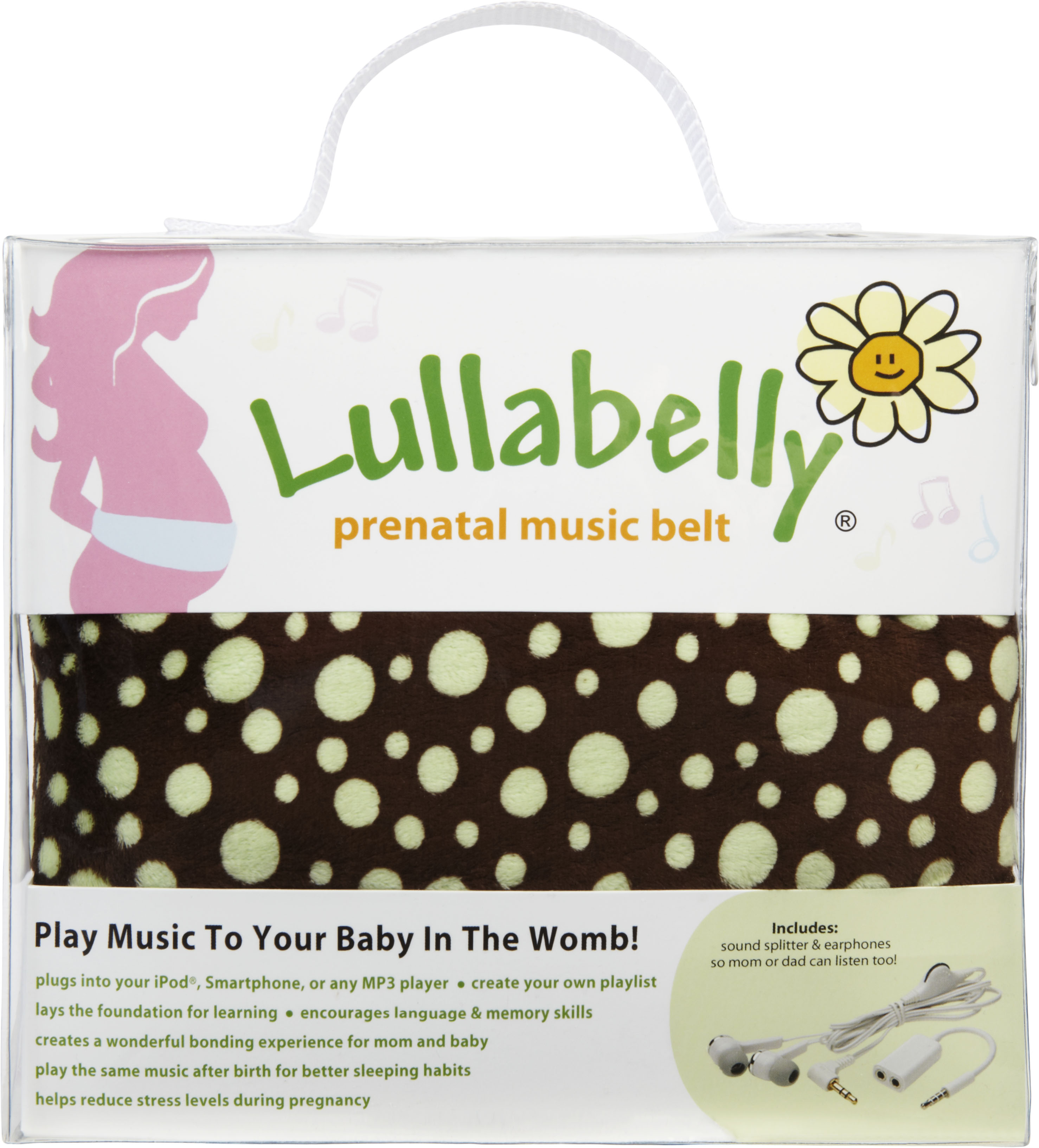
I have always reasoned that we as adults like certain kinds of music to create certain moods. We like perkier music during the day, and calm music at night. It is logical to assume our babies like the same. I liked to play Emma music before she was born. I used a Lullabelly belt and played my Ipod for her. I don't know whether or not it helped in her mental development, but hopefully she found comfort in hearing it. I also learned that babies show recognition to voices, stories, and music that they hear in the womb. I hope to have familiar sounds around her when she made her entrance into the world. 


Music is also vital for toddlers and older children. However the best age to learn a musical instrument is before late teens. Most anything is learned easier as a child, while the brain paths are still developing. Music is helpful to aid in how a child reasons and it is good to start teaching music to children as soon as possible. A lot of child development centers offer Kindermusik for children. It is a program to help teach children rhythm, harmony, melody, and other basic principles of music. If such a program is unreasonable, a mother can teach her child music, by getting soundtracks of fun nursery rhymes or folk songs and singing along with her child. She can intorduce noisemakers  rattles, or colored children's bells to her little ones and encourage them to keep rhythm or tune. 


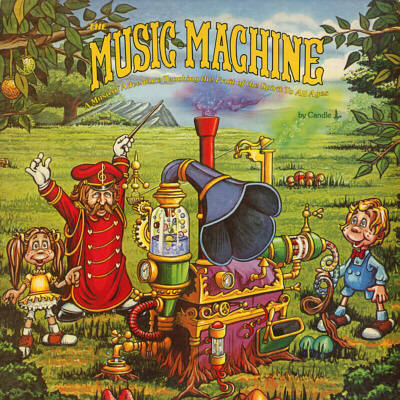
I have enjoyed observing my daughter starting to notice music. If she is fussy in the car, often she will enjoy a music CD geared for children with children singing simple songs. The current favorite we listen to is one I listened to as a child called "Music Machine." It is about a machine that sings and plays whatever object is put into it. For instance if fruit is put in, it will sing and play songs about the fruit of the spirit. It is a lot of fun. 


Other children's music recommendations: