Good Quality Clothing
Quality Appearance:
Look Comfortable
Well Fashioned/Tailored
Made to flatter and Fit
Classic or Classic with a touch of fashion-not overdone
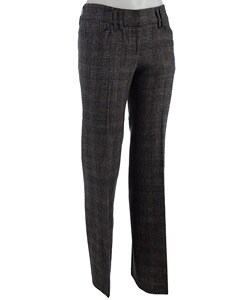
 For example the wool plaid trousers from LL Bean's Signature collection might not be my personal taste, but just looking at them, I can see they are high quality merchandise. The cut of the slacks is flattering and fashionable, unlike the plaid slacks from Overstock.com on the right. The appearance of the fabric also means a great deal. It should look special and unique and substantial. The slacks to the left are one of a kind, the fabric is probably custom selected for those slacks. The slacks on the right look uncomfortable, rough, and are probably cut from a standard stock of fabric that is used in hundreds of other retail designs.
Quality Feeling
Soft
Thick
Wrinkle Resistant
I love to touch fabric. I can tell a good piece of fabric from a cheaper piece simply by the feel of it. I was recently disappointed when I purchased some rather expensive and name brand T-shirts for my husband. I was unable to feel the shirts before I purchased them because they were packaged in plastic and I didn't feel right about opening them before purchasing. When I got home and unwrapped the package, I was disappointed to feel that the shirts were thin and rough. Not the thick, and supple feeling I thought an undergarment of that expense should have. Thin fabrics are usually an indicator of cheep, stingy producers. There are rare cases of thin fabrics that are of high quality. The key is the feel. Good quality thin fabrics should be luxuriously soft, if thin fabrics are rough, or only semi-soft, it is certain that the quality of the fabric is very cheap. I also like to squeeze clothes to test the wrinkle resiliency. The only fabric that is permitted to wrinkle is 100% linen. Other than that, most fabrics should bounce back pretty easily.
Fabrics To Look For in Quality Clothing:
Lined Garments: Polyester is the only fabric that will never shred out of a coat or wear down in slacks-it is always the best choice for lining, however only high end clothiers use it, typically acetate lining is used. Acetate is the worst fabric invented-it wears out, it is noisy, uncomfortable, and overall cheap. Anything with acetate in it is therefore a cheap garment, I don't care how much it costs.
Sweaters: Sweaters should be made of 100% wool or cotton to qualify as good quality clothing. Many sweaters are made from nylon, because the fact that is doesn't pill. However, it is an uncomfortable, artificial, and therefore lower grade fiber.
Jeans: The "Made in America" label will often determine the quality of fibers used in a pair of jeans. The Untied Stated has strict standards of fiber quality in manufacturing, whereas other countries have no standards and quality is weaker or non-existent. Jeans should be durable, well-cut, and soft.
Socks and underwear: 100% cotton-the thicker, the softer, the better quality
Shirts, skirts, dresses: 100% silk, cotton, or linen-other than the linen, the fabrics should be wrinkle resistant
Suits: 100% wool-yes even for summer. Tropical wool is used to make lightweight suits and it is very comfortable even in the summer. Of course, suits should be lined with polyester.
Trousers: 100% cotton or 100% wool.
The most important key to finding a good quality garment is the type of fabric used. Good quality clothes typically use 100% natural fibers such as cotton, wool, linen, silk, or other natural fibers. On occasion Rayon is used because of it's ability to flow and drape. Polyester is used in good quality clothing as lining fabric-that is it.
Quality in the making:
Large seam and hem alloences
Lined garments
Secure stitching
How a garment is sewn together also tells a lot about the quality of the item. For example, I have altered oodles of bridesmaid gowns in the past few years. There are some brands, that I groan when I have to alter them because they are simply cheap. A well made gown will be made to altar because the producer expects that whomever buys that garment cares how perfectly it fits and will altar it accordingly. David's Bridal are the worst and cheapest gowns I have worked on, while Alfred Angelo is the nicest. David's Bridal will have very small seams and clip them-making letting out virtually impossible, while Alfred Angelo leaved a good inch of seam allowances. So before purchasing a more expensive garment-especially suits--I feel the seam allowances. A good piece of clothing will have generous amounts left in the seams. There will also be a good hem allowance on wool skirts and slacks to lengthen of needed. Another thing to look for in how a garment is made is to check for lining. Wool and some heavier fabrics should always be line-with polyester of course. Also, the only place I care to see chain stitching would be on hems. It should never-I repeat-never be used on the making of a garment. Just what I need is to catch a stitch and my whole garment falls apart!
Chain Stitch: Don't Want to See.

Regular stitches: Want to see.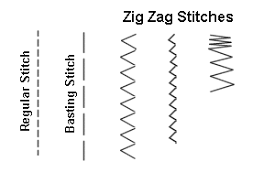
Some Consistently Good Quality Clothing Brands
Tommy Hilfiger
L.L. Bean
Orvis
Eddie Bauer
Perry Ellis
Brooks Brothers


No comments:
Post a Comment