I thought I had successfully child proofed out home, but I honestly have come to the conclusion that such a think is impossible. This morning I believe my daughter graduated to the terrible two club at nine months old. It seemed like every minute I turned around there was another mess. Although I keep the bathroom door closed, I leave it open in the mornings while I use the mirror. Emma usually entertains herself with her bathtub toys. Well, this morning, she found something new and exciting. She discovered that she can reach the toilet paper and it unrolls into beautiful piles on the floor. After I re-rolled the paper as well as I could, I started making the bed in our bedroom. She followed me into the room of course. In a few minutes, I turned to see our torchiere lamp tipping over. I was too late to save it. It hit the wall and the glass shade broke into a thousand pieces. I picked up the large pieces of glass and shut the door to keep Emma out of the room until I had time to vacuum. I went online to search for a replacement globe, and set her up with toys in her room. She seemed happy and quiet for some time. Then I realized it was too quiet. When I peeked in on her, she had taken all her toys out of the basket and piled them on the floor, pulled the wall hangings she could reach off the walls, taken apart the humidifier, and had made her way to her changing table and figured out how to take off the cap to the petroleum jelly. She had such fun with that goop. It was in her hair, on her clothes, all over her hands and feet; not to mention everything she had touched after she opened the bottle. I decided it was time for her to take her morning nap. So I washed her up and put her to bed. I was hoping for a couple hours to breathe. That couple hours lasted only half an hour and she was up-ready for more adventures! Her first one was a wonderful discovery. I had left my hot chocolate cup on the end table, from my morning devotions. It ended up being just within her reach. When I turned around, what she hadn't spilled on the floor or on her clothes, she was playing with her hands in the cup. What a treat! It is only 11 o'clock in the morning and my to "do-list" for the day is only getting longer. I adore my daughter, but I must admit, I will breathe a sigh of relief when it is bedtime tonight.
Mothering can often be a very discouraging and unrewarding task. It is thankless, unappreciated, and taken for granted by all who are not mothers. Often on days like today, I have to remind myself that it is the most vital job I have been given to do. My child's future greatly depends on how she is mothered. Love, patience, and consistent, godly, nurturing will be vital for her throughout her growing-up years. I can only be as successful as I am patient and kind to my little curious one. Today Galations 6:9 has been my comfort.
Gal. 6:9 Let us not lose heart in doing good, for in due time we will reap if we do not grow weary.
Thursday, February 23, 2012


Tuesday, February 21, 2012
Free PAM Cooking Spray
http://www.pamcookingspray.com/guarantee.pdf
Monday, February 20, 2012
Lessons from Jochebed
This morning as I was rocking my 9 month old baby to sleep, I began pondering a woman name Jochebed. Jochebed, the mother of Moses, was an incredible woman of faith. Once she found out she was expecting a child, she had less than nine months, to consider how to save her baby's life if he were a boy. In her days where she lived in Egypt, all Hebrew baby boys were slaughtered at birth. As a mother, I know I would be spending those months of my pregnancy brainstorming on how to keep my baby alive if it ended up being a boy.

Jochebed delivered Moses, and was able to keep him secretly until he was three months old, but it was soon going to be impossible for her to keep him without someone asking questions. So, she and her husband Amram, made a basket out of bulrushes (floatable weeds found in Egypt) and used tar to seal out any water from the basket. In the daytime, Jochabed would put Moses in the basket and let him float in the thick Nile weeds, while Miriam, Moses sister, would keep and eye on him. I cannot imagine putting my baby in a basket every day like that-not knowing if he would cry and the wrong person would find him, but most of all, I would ache to not being able to enjoy him and watch him learn and play.
Jochebed had no choice but to trust God for Moses' well-being, she was incapable of doing more to protect him. She could not prevent him from drowning, being spotted by Egyptian soldiers, being carried away with the current, or being eaten by an crocodile. As a mother, I can only imagine the concerns that would be on my mind as I set my 3 month old baby out to float on a river. Jochebed was left with no recourse, but to trust the Lord for what good or bad may happen to her child.
God allowed the Egyptian princess to find Moses. The princess did not know Jochebed was Moses' mother, and asked her nurse Moses until he was weaned. In ancient times, women nursed their baby until the child was 3-5 years old. As a mother, I would have dragged out nursing as long as possible, knowing that after those few years, my baby would be taken to live in a heathen home and I would have no more time with him. It brings tears to my eyes to think of how hard it must have been for Jochebed to know that she would only have 3-5 year to be with her son. At the same time, she must have been comforted that her son would be allowed to live, and the Lord had seen fit to protect him for a purpose.
So, knowing that she had been given 3-5 years to instill godliness and Hebrew culture in her child, I wonder if Jochebed's mothering took on an increased vigor. She knew that after he was five, Moses, would be trained in the religion and custom's of the heathen Egyptians. What she taught him in his first five years of life would be crucial. Yet, still, she was ultimately unable to control how he would act and react when placed in an ungodly culture. As when she left her son in a basket in the river, Jochebed was able to do all she could to teach her son to be God-fearing, but she ultimately had to trust God for his spiritual well-being.
As a mother, Jochebed's example stuck fiercely in two ways. First, do I rely on my ability to protect my child physically, or am I totally resting in God's protection and guidance for my child? Ironically, as a mother, I find myself believing the lie that I am able to protect my child from illness, tragedy, death, or pain, but in reality, I am just as incapable to protect my children from harm as Jochebed. I am limited in strength and wisdom. Furthermore, as much as I believe I know what is best for my children, I do not-God has already formed a plan for their lives and will preform what is best for them, whether He allows disease or death to be a part of it, is good. As Jochebed, I must do what I can to protect my children, but ultimately rely on the Lord to bring about in their lives What he has planned for them since the time they were in my womb. (Ps. 139).
Second, how seriously do I take my children's spirituality, even when they are very young? I wonder if I would take my children's Spiritual training much more seriously if I knew I only had only 3-5 years to teach them all they will learn about the Lord? Like many mother's, I assume I will be able to raise my children throughout their childhood, with that assumption in mind, do I give them less than my best as a mother? Do I squander teachable moments? Do I substitute good things for the best things in their lives? Do I use every method possible to influence their lives for godliness? Am I a consistent example of faith and godliness in my children's lives?
Making the most of your time, because the days are evil. Eph. 5:16
Wednesday, February 15, 2012
Winter Fruits and Veggies
Fruits and vegetables are at their peak in freshness certain times of the year. If a fruit or vegetable is in season, it will also be the less expensive than it will be for the rest of the year. Aside from going to a farmer's market which are usually closed through the winter months, winter can be a difficult time to obtain reasonably priced fruits and veggies. Now is the time to stock up on the winter fruits from discount stores and the local supermarket. I have searched online for fresh produce, but it is always the most expensive method of purchasing fresh fruits and vegetables, especially once shipping and handling is calculated into the equation. So-as always, buying local, is the best route.
Look For Sales on these winter produce:
Cabbage Family
Brussel Sprouts
Squash Family

Look For Sales on these winter produce:
Cabbage Family
Brussel Sprouts
Squash Family
Buttercup/butternut squash
Dumpling Squash
Exotic Fruits
Passion Fruits
Persimmons
Kiwi
Cherimoya
Red Banana
Pumelo
Citrus Fruits
Citrus Fruits
Clementines
Grapefruits
Oranges
Tangerines
Roots
leeks
Turnips
Turnips
Pears
Best pick of the Month:
February-Leeks are the best pick-fresh and cheap-they can be chopped and frozen for later use in salads, soups, or meat dishes
March-Cabbage-mixes will with corned beef and those European dishes like bubble and squeak, but can also be used in salads, cabbage rolls, sauerkraut, or sliced and frozen for soups
March
Tuesday, February 14, 2012
Pregnant and Nursing Mom-Increasing Milk Supply-switching to formula
Formula is very expensive and I really wanted to breastfeed Emma until she was one, so I began researching ways to increase my milk supply. A lot of herbs that will increase a mother's milk supply, unfortunatly can also cause contractions and are therefore unsafe to take-especiallay in the later stages of pregnancy. A lot of articles I read painted a fairly bleak picture for a mom's ability to keep nursing while preganant. However, I did find some resources that worked wonders and in two days of following this regiment, my milk suppply doubled.
How to increase milk supply:
Concoction:
1 T. Brewers Yeast ($15 a large can)
1 T. Wheat Germ ($.99 lb)
1 T. Black strap molasses (.99 lb)
Mix with warm water and drink 2-3 times a day
Eat oatmeal daily
Drink 6-8 glasses of water a day
Drink 1 cup of Mothers Tea 3 times a day ($5 a box) - ok to drink only the first trimester-ask Dr. first
Pump or nurse every 2 hours
Pump after nursing to completely empty any drop of milk so my body tells itself to make more
Avoid parsley, mint, and rosemary because they decrease milk supply
Gently Weaning
Weaning a baby is probably a more trying time for a mother than it is for the baby. Baby's are highly adaptable little creature's, mother's on the other hand have to adapt to the fact that their little one is growing up and can survive without mama's milk. It can be a very emotional time for a mother. I found it helpful to take joy in my baby's enjoyment of table food. I loved to watch her try and respond to new foods. I found comfort in the fact that she was still happy with eating-even if it wasn't from me.
Steps I took to weaning Emma: (a 2-3 month process)
1 T. Brewers Yeast ($15 a large can)
1 T. Wheat Germ ($.99 lb)
1 T. Black strap molasses (.99 lb)
Mix with warm water and drink 2-3 times a day
Eat oatmeal daily
Drink 6-8 glasses of water a day
Drink 1 cup of Mothers Tea 3 times a day ($5 a box) - ok to drink only the first trimester-ask Dr. first
Pump or nurse every 2 hours
Pump after nursing to completely empty any drop of milk so my body tells itself to make more
Avoid parsley, mint, and rosemary because they decrease milk supply
Gently Weaning
Weaning a baby is probably a more trying time for a mother than it is for the baby. Baby's are highly adaptable little creature's, mother's on the other hand have to adapt to the fact that their little one is growing up and can survive without mama's milk. It can be a very emotional time for a mother. I found it helpful to take joy in my baby's enjoyment of table food. I loved to watch her try and respond to new foods. I found comfort in the fact that she was still happy with eating-even if it wasn't from me.
Steps I took to weaning Emma: (a 2-3 month process)
Morning-breastbfeed upon baby's rising-gradually eliminate and start the day out with cereal-I found instant oatmeal mixed with fruit is perfect
Mid-morning-feed baby cereal and breasfeed after if she still seems needy-gradually decline in doing that and just switch to cereal or formula for a morning snack
Lunch-feed baby veggies and some form of protien(cereal or meat)-protein keeps a body from becoming hungry again quickly-for the first couple weeks-nurse after lunch-gradually switch that nursing to an ounce or two of formula AFTER the baby has already had lunch-milk is not supposed to be the main sustinance anymore
Mid-afternoon-nurse or introduce a bottle of formula-after a month rice cereal or a soft snack is a good substitute-I even found that warm water (after Emma was 9 months) worked well as a soother before naptimes, instead of milk or formula.
Evening-a dinner of veggies, meat or cereal-I usually mix everything together
I would not give milk or nurse Emma after dinner-she can eat Cherios now and can have those, but usually she is fine after dinner until bedtime which comes around 7-8.
Bottle of formula-can mix with cereal or serve alongside cereal. I did not breastfeed.
Night feedings-breastfeed, slowly switch to watered down formula if baby continues to wake up after 9 months.
Emma has adapted to formula wonderfully and doesn't seem to miss Mama. I breastfeed her once a day, but there is little to no milk left in me now that I am in the second trimester of pregnancy. In can case, she has adapted well, and eats and sleeps wonderfully.
Saturday, February 4, 2012
Ritz Peanut Butter Cookies
When Valentine's Day rolls around, I like a simple yummy treat to share with people. This recipe is an old one from my childhood, but it will be great for children wot help with when they get older.
Ingredients:
Creamy Peanut Butter
Semi-sweet chocolate chips
Crisco
Ritz crackers
Sprinkles
1. Spread peanut butter over crackers and sandwich with a plain cracker
2. Melt 1 T of Crisco for every cup of chocolate chips in a microwave until soft
3. Dip half of each sandwich in the chocolate and set on a wax paper lined cookie sheet
4. Sprinkle with festive sprinkles
5. Chill in a refrigerator until the chocolate hardens

Ingredients:
Creamy Peanut Butter
Semi-sweet chocolate chips
Crisco
Ritz crackers
Sprinkles
1. Spread peanut butter over crackers and sandwich with a plain cracker
2. Melt 1 T of Crisco for every cup of chocolate chips in a microwave until soft
3. Dip half of each sandwich in the chocolate and set on a wax paper lined cookie sheet
4. Sprinkle with festive sprinkles
5. Chill in a refrigerator until the chocolate hardens

Friday, February 3, 2012
Milk and Hormones
The USDA approved rBST as a safe hormone for human consumption twenty years ago. Milk from cows injected with rBST has been shown to carry large amounts of IGF-1-a naturally occurring growth hormone. IFG-1 has been shown to increase the risk of breast and colon cancer. Besides producing 20% more milk, many farmers noticed changes in the health of their cows after using the rBST drug. Because the cows were using so much energy and personal nutrients to produce and unnatural amount of milk, they became more lean and susceptible to various illnesses. Often the cows became infected with mastitis which ruined their milk supply until it healed. Canada and the European Union both banned the use of milk producing hormones in cows, yet the USDA still claims that it is harmless.
The other concern is the amount of naturally occurring estrogen found in cows milk. In a study published by Harvard, stating that when a cow is in the late stages of pregnancy her milk contains 33% more estrogen than any other time in her life. On small farms or in third world countries, a cow is not milked 365 days a year-not in the later stages of pregnancy. The hormones in that milk are much lower. According to the same Harvard article, countries like Japan that had little to no dairy consumption, but increased it over time had no prostate cancer-after introducing dairy, the cancer rate steadily increased. Research shows that the commercialized production of cows milk is the likely cause because of the high levels of naturally occurring estrogen in the fat of the milk from pregnant cows. Several studies have shown that after children who were accustomed to drinking milk from a cow that was not milked during pregnancy and were given commercial U.S. milk had an immediate increase in their hormone levels. An increase in hormone levels leads to reproductive problems and cancer. The good news is that the high levels of hormones are mostly contained in the milk-fat, so if a person chooses to drink skim milk, it is practically hormone free.
 Aside from drinking organic milk or purchasing milk from a local small farm, a consumer can choose to drink commercial milk that has the label "no rBST" or "no BGH." That milk was taken from cows that have not been injected with the milk increasing hormones. It can often be purchased at the same price or for pennies more at an local supermarket.
Thursday, February 2, 2012
About Organic Meat
Most of us assume that the meats we purchase at a grocery store are injected with hormones and steroids to make them the plump choices of meat we enjoy. Then we assume that organic meats are better for us, but are probably more lean and tough. 
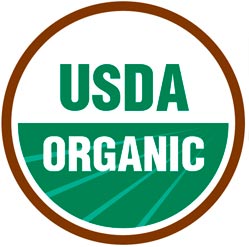

Organic meat comes from animals that are not vaccinated to prevent disease, allowed to access outdoors and kept clean to prevent the spread of disease naturally. Whereas animals that are not organic are given growth hormones, vaccinations and medicine to speed up growth and maintain health. If a product is sold with the label "organic," it must be certified by the USDA or the standards given to organic meat may not be relied upon. Some meats are 100% organic and have the USDA seal of authenticity. Some meats are partially organic-in particular some processed meats where non-organic herbs or seasonings may have been used. Those meats may have a label stating that only some of the products are organic.
- 100% Organic-no vaccinations, growth hormones or steroids were given to the animal. The animals feed is organic-usually grain or pasture grass with no chemicals added, and the animals are usually free range-meaning they are kept clean and allowed to roam freely-not in a small pen or coop.
- Cage Free-this usually refers to poultry, that are allowed to roam freely in a large coup or pen.
- Free Range-this also usually refers to poultry. It means that they are not contained in a pen or coup, but allowed to roam freely in a pasture. Fresh eggs from these birds are said to be the most nutrient dense of all eggs.
- Natural-means the product has not been chemically altered. For meats, it is usually the by products that may contain this label-milk, eggs, lard, etc. They are not organic-just not altered in chemical state from their original condition. For instance milk may come from a cow that has been injected with immunizations or hormones, but the milk has not been homogenized or pasteurized-it is "natural."
- Hormone-Free-does not mean organic-only that the animals have not been injected with growth hormones-the animal may eat non-organic grains, be kept in a cage, or injected with vaccinations.
People choose to eat organic foods for three basic reasons-health, flavor, or environment. Organic is simply better for all three. Where organic meat is not good for is the pocket book. It is extremely expensive. Animals fed on organic diets and cared for according to the USDA standards of organics, are costly for the farmers and can not be raised in mass, bulk, or injected with hormones to speed up growth. Organic food takes time and money. So the consumer must consider whether he or she is concerned with health, flavor, and or the environment more than his or her pocket book. In my home the pocket book usually wins and we eat mostly non-organic meats. However, more and more people are considering organic foods over non-organic foods and the organic market is growing in leaps and bounds making the organic meats more affordable.
According to the Mayo Clinic, it has not been scientifically proven that organic food is better for a person than non-organic food. To me, it makes logical sense that it would be more healthy to eat organic, many nutritionalists agree with me on the subject.
In my research on the difference between organic and conventional meats, I read some disturbing articles. Stating the following concerns about conventional meat:
- Conventional meats cause weight gain in humans because the animals are fed soy and carbohydrates to fatten them up. Humans eat the meat and also "fatten up"
- Conventional meats and their dairy products such as milk and eggs cause early puberty in children. The hormones (in particular estrogen) are fed to the animals to speed up their growth-humans consume them and they also are sped up in their hormonal growth.
- Mad Cow disease is a risk to humans who eat non-organic meat because animals that are not grown organically are fed ground up parts of other dead animals to promote speedy growth and fattening. In fact, after the outbreak of Mad Cow disease in Europe, that practice was banned in the European Union. It is still practiced in most other countries.
- Non-organic meats may cause cancer. Studies done by the European Union have questioned whether the hormones injected into meat can cause an hormonal imbalance in the human system if ingested. Breast and prostate cancer may be directly caused by hormones added to meat.
- One scary point is that the most susceptible to the ingestion of meat hormones are pregnant women, unborn babies, and young children. Surprisingly, no substantial studies have been done on the subject of hormones in meat and early puberty in girls.
Good News
In the United States hormones are not allowed in poultry or pork so those products are naturally hormone free as long as they are USDA approved. Antibiotics are still used in pork and poultry however.
Red meat (beef, veal, mutton, and lamb) may be labeled "hormone free", meaning that the particular animal has not been injected with hormones. That meat is not organic, but may be cheaper than organic and a little healthier than conventional meat.
Some meat is labeled "no antibiotics" that means the animal had not been injected with antibiotics. It does not mean the animal is hormone free or organic. Of course, if it is pork or poultry it is not organic but without injected hormones and antibiotics, it may be a cheaper, healthier, alternative to organic meat.
Since the European Union does not allow the use of hormones in meat production, many other countries
Subscribe to:
Comments (Atom)