Organic meat comes from animals that are not vaccinated to prevent disease, allowed to access outdoors and kept clean to prevent the spread of disease naturally. Whereas animals that are not organic are given growth hormones, vaccinations and medicine to speed up growth and maintain health. If a product is sold with the label "organic," it must be certified by the USDA or the standards given to organic meat may not be relied upon. Some meats are 100% organic and have the USDA seal of authenticity. Some meats are partially organic-in particular some processed meats where non-organic herbs or seasonings may have been used. Those meats may have a label stating that only some of the products are organic.
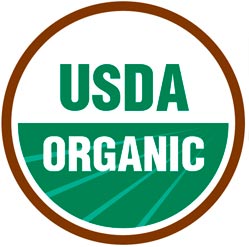
- 100% Organic-no vaccinations, growth hormones or steroids were given to the animal. The animals feed is organic-usually grain or pasture grass with no chemicals added, and the animals are usually free range-meaning they are kept clean and allowed to roam freely-not in a small pen or coop.
- Cage Free-this usually refers to poultry, that are allowed to roam freely in a large coup or pen.
- Free Range-this also usually refers to poultry. It means that they are not contained in a pen or coup, but allowed to roam freely in a pasture. Fresh eggs from these birds are said to be the most nutrient dense of all eggs.
- Natural-means the product has not been chemically altered. For meats, it is usually the by products that may contain this label-milk, eggs, lard, etc. They are not organic-just not altered in chemical state from their original condition. For instance milk may come from a cow that has been injected with immunizations or hormones, but the milk has not been homogenized or pasteurized-it is "natural."
- Hormone-Free-does not mean organic-only that the animals have not been injected with growth hormones-the animal may eat non-organic grains, be kept in a cage, or injected with vaccinations.
People choose to eat organic foods for three basic reasons-health, flavor, or environment. Organic is simply better for all three. Where organic meat is not good for is the pocket book. It is extremely expensive. Animals fed on organic diets and cared for according to the USDA standards of organics, are costly for the farmers and can not be raised in mass, bulk, or injected with hormones to speed up growth. Organic food takes time and money. So the consumer must consider whether he or she is concerned with health, flavor, and or the environment more than his or her pocket book. In my home the pocket book usually wins and we eat mostly non-organic meats. However, more and more people are considering organic foods over non-organic foods and the organic market is growing in leaps and bounds making the organic meats more affordable.
According to the Mayo Clinic, it has not been scientifically proven that organic food is better for a person than non-organic food. To me, it makes logical sense that it would be more healthy to eat organic, many nutritionalists agree with me on the subject.
In my research on the difference between organic and conventional meats, I read some disturbing articles. Stating the following concerns about conventional meat:
- Conventional meats cause weight gain in humans because the animals are fed soy and carbohydrates to fatten them up. Humans eat the meat and also "fatten up"
- Conventional meats and their dairy products such as milk and eggs cause early puberty in children. The hormones (in particular estrogen) are fed to the animals to speed up their growth-humans consume them and they also are sped up in their hormonal growth.
- Mad Cow disease is a risk to humans who eat non-organic meat because animals that are not grown organically are fed ground up parts of other dead animals to promote speedy growth and fattening. In fact, after the outbreak of Mad Cow disease in Europe, that practice was banned in the European Union. It is still practiced in most other countries.
- Non-organic meats may cause cancer. Studies done by the European Union have questioned whether the hormones injected into meat can cause an hormonal imbalance in the human system if ingested. Breast and prostate cancer may be directly caused by hormones added to meat.
- One scary point is that the most susceptible to the ingestion of meat hormones are pregnant women, unborn babies, and young children. Surprisingly, no substantial studies have been done on the subject of hormones in meat and early puberty in girls.
Good News
In the United States hormones are not allowed in poultry or pork so those products are naturally hormone free as long as they are USDA approved. Antibiotics are still used in pork and poultry however.
Red meat (beef, veal, mutton, and lamb) may be labeled "hormone free", meaning that the particular animal has not been injected with hormones. That meat is not organic, but may be cheaper than organic and a little healthier than conventional meat.
Some meat is labeled "no antibiotics" that means the animal had not been injected with antibiotics. It does not mean the animal is hormone free or organic. Of course, if it is pork or poultry it is not organic but without injected hormones and antibiotics, it may be a cheaper, healthier, alternative to organic meat.
Since the European Union does not allow the use of hormones in meat production, many other countries


No comments:
Post a Comment